
Midwinter
Beauty for Tumultuous Times

“Attention changes the world. How you attend to it changes what you find there.”
— Iain McGilchrist
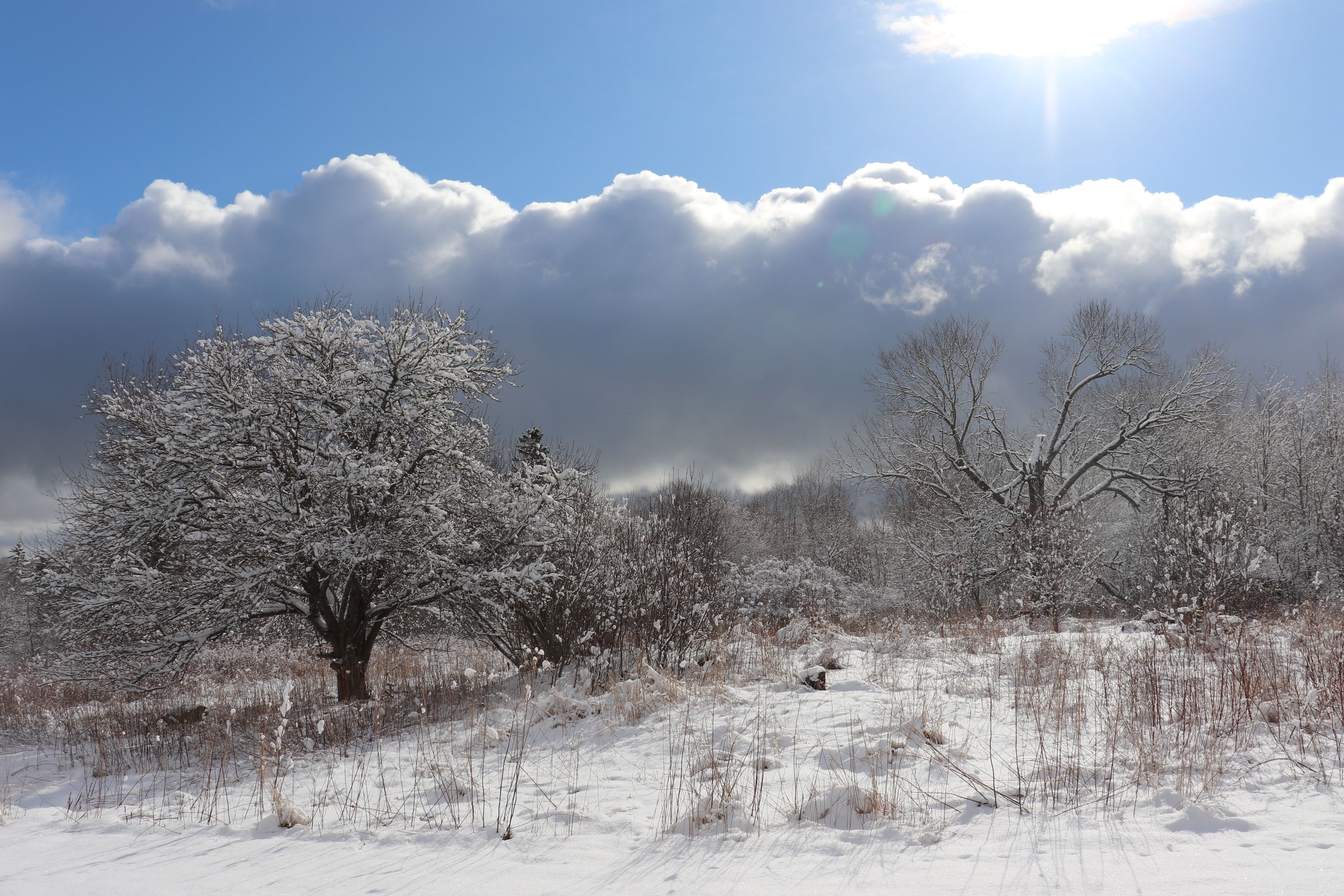
In the living world, everything touches everything else: the tangles of meadow grass, tree roots and branches, the snow that will soon sink into the earth, the cold air, the quickening sun. Nothing is wearing clothes. Nothing is truly isolated. Air is flowing. Cloud is taking in and letting go. Birds are listening. Land is receiving.
The two mature trees in the photograph, an Ash (at the rear) and an Apple (foreground), seem to speak to each other. The bank of advancing cloud seems encouraged by the light emerging from beneath. The sun ray seems to communicate directly with the Ash’s broken trunk. The light energy feels like a bell being struck, and the bell ignites joy and wonder, emotions radiating from the heart.
Appreciation deepens when I remove the qualifying ‘seems’ and allow the beings personhood: the Ash and Apple speak to each other; the Sun speaks to the Ash, the Light speaks to the Cloud.
And that joyous wonder. The World speaks: I respond like a struck bell.
*
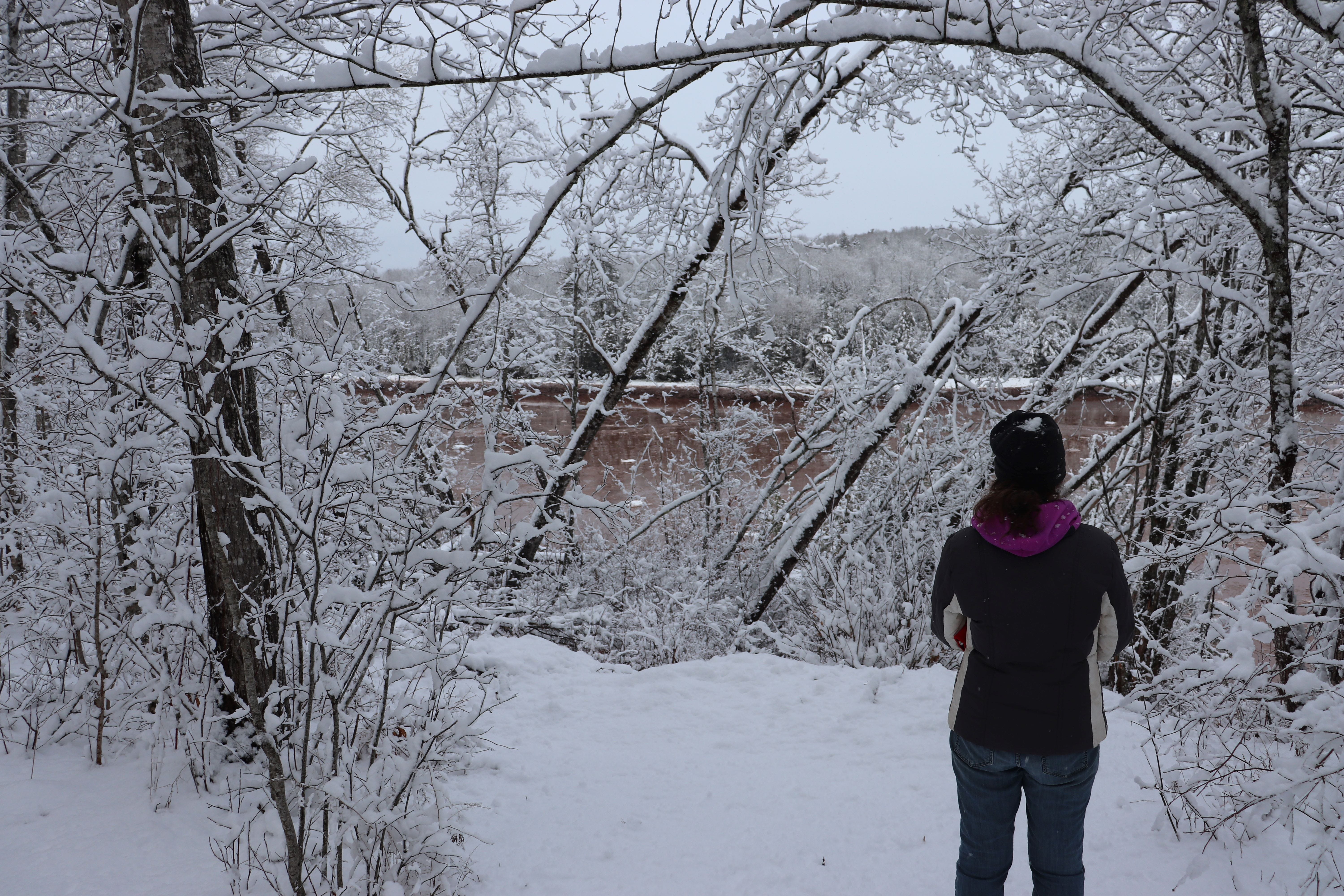
There’s not much in the news about Beauty. For a writer like me, spending time on a post about Beauty can seem rather dubious, twee and lightweight and girlish, indulgent escapism from the violence and desperation spreading like fire throughout the human world, driven by our current leaders of a warped value system that has been with us for far too long.
Trying to talk to university students about Beauty, as I have often done, one bumps up against a lot of hesitancy and embarrassment or sheer annoyance, because that’s not what serious people think about, and Beauty isn’t about thinking but feeling, and what is the practical point? This happens even in a creative writing class. I find this very sad, because when these same people begin to write about their lives, they often share the great pain they’re carrying, sometimes terrible experiences, and even the ones not so personally burdened and traumatized are weighted with the grave collective realities of these times.
As well, when coaxed, they can write about Beauty gloriously. They can reveal their souls. Their faces lose the flat affect adopted in classes. It doesn’t take much, just some encouragement and affirmation that joy and wonder are the most precious gifts and guides we can receive.
Pursuing power, ambition, money, personal and national achievement does not line up with attending to Beauty, because Beauty comes from the outside. Beauty is a force, as Deena Metzger writes in her recent exquisite essay. It’s there, arriving or departing on its own impetus. It creates the living world and the cosmos itself.
Beauty is not simply about the sights, sounds and smells that move us to awe—extraordinary as these can be—but in the way everything speaks together. The harmonies. The relationships that bring forth Life.
We don’t need to do anything but let it all happen. Of course we might try to gather it, shape it, imitate it, hoard it even, though we might as well try to hoard air.
But we can, very easily, push Beauty away.
*
This morning as usual I read the news, which in summation described power run amok, more bare-fisted than ever, and psychopathy ruling in places where one expects the most selfless and wise to lead. This is what eventually happens under imperialism.
Imperialism in practice and as a value system is above all about interference (if I can be excused the use of so bland a word): about imposing one’s will on another, removing or radically manipulating the other’s sovereignty and life course for the imperialist’s own goal. Imperialism can appear to offer security and ease by concentrating authority top-down and exerting maximum control. But imperialism is the opposite of mutuality—meaning, the opposite of Life, which depends on each thing being willing and able to accommodate many others, in balance and harmony in spite and because of radical differences. Which depends on, and teaches us, community.
Our ancestors in northern climates lived with the day-to-day challenges of keeping warm and fed through long winters. They knew that survival depended on attending to the whole community, ensuring all were cared for, and that community collapsed when allowed to splinter and segregate, or when one person or group tried to seize power. The strength of community lies in its wholeness.
We face hard and tumultuous times. Today is midwinter: Imbolc in the Celtic tradition of my ancestors, the start of Apuknajit for Mi’kmaw people in Nova Scotia. In these traditions, offerings were made to honour the challenges and gifts of this moment. Ritual helps one remember the relationships and attend to them, even and especially when the levels of misery, fear and conflict in the human world are overwhelming, and the pain is so intense. In ritual we access the solidarity available to us at every moment: solidarity with the living world, and the creatures, spirits and people who have survived another winter. We attend to Beauty.
beautiful!!!
Always happy to read your words, Sharon. I'm finding beauty these days in the birds and in the night sky.